
From the Suburbs to Homestead – Rural Land
Table of Contents
Transitioning from a conventional suburban lifestyle to rural land development isn’t just a change of address—it’s a change in mindset. Whether you are eyeing raw acreage or planning a custom build, this guide is your roadmap. We’ll walk through the reality of rural development, from property evaluation and essential infrastructure to the hard decisions that turn a parcel of land into a self-sufficient homestead.
We are just now discussing these and getting the skeletons together, join us and help out! This is a living document; if you have experience, questions, or a ‘lesson learned’ to add, let us know!
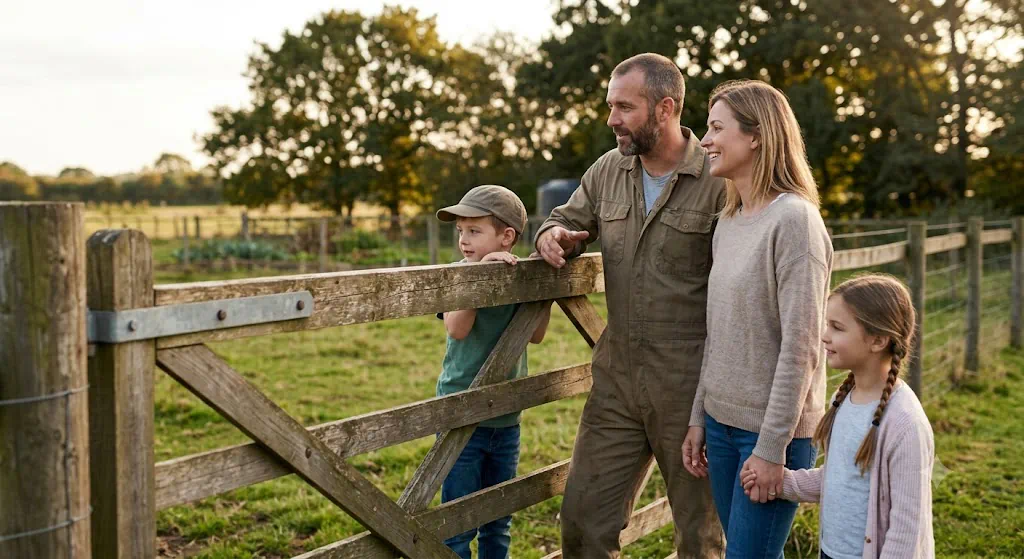
Contemplating the Move: Is Rural Living For You?
Everyone considering a move to rural land has a reason, or multiple reasons, for considering. Maybe you’re seeking the quiet of a remote area, a slower pace, tired of the constant hum of traffic, or simply wanting more space to breathe. It is one thing to live in areas where parking is at a premium, traffic is a daily way of life, noise and congestion compress our lifestyle – so we ponder getting away from it all – it is another to actually take the step and make the transition to rural land. Before you bargain for that property, you have to be honest with yourself: are you ready to be your own utility provider, land manager, and emergency responder?
Not that you MUST become each of these at all times, but situations do arise. Rural land development can be a large undertaking. Do NOT rely on your real estate agent or their hired inspector(s).
Buying Rural Land With Existing Access Having a paved or established dirt road right to your property line reduces a lot of up-front anxiety. The pros are immediate: heavy construction equipment can easily reach your build site, and tapping into grid utilities is generally much closer and cheaper. However, this convenience comes at a premium. Highly accessible land usually carries a higher purchase price, and being closer to established roads often means sacrificing some of the seclusion or privacy many seek when moving to the country.
Buying Rural Land Without Existing Access Choosing raw, hard-to-reach acreage often offers the different rewards: deep, uncompromising privacy and perhaps a much lower purchase price. But getting there takes determination and capital. You will need to carefully navigate legal easements to ensure you have the permanent right to cross neighboring land. Be prepared for substantial upfront costs to cut, grade, and maintain a passable driveway. Furthermore, without easy access to municipal lines, you will likely need to embrace off-grid necessities like solar arrays, well drilling, and septic systems from day one.
Key Takeaway:
QRC (Quick Reality Check): Rural living trades convenience for self-reliance. If you’re ready to trade traffic for frogs (maybe crickets) and city services for personal responsibility, you’re in the right place.
Doing Your Due Diligence: What to Look For
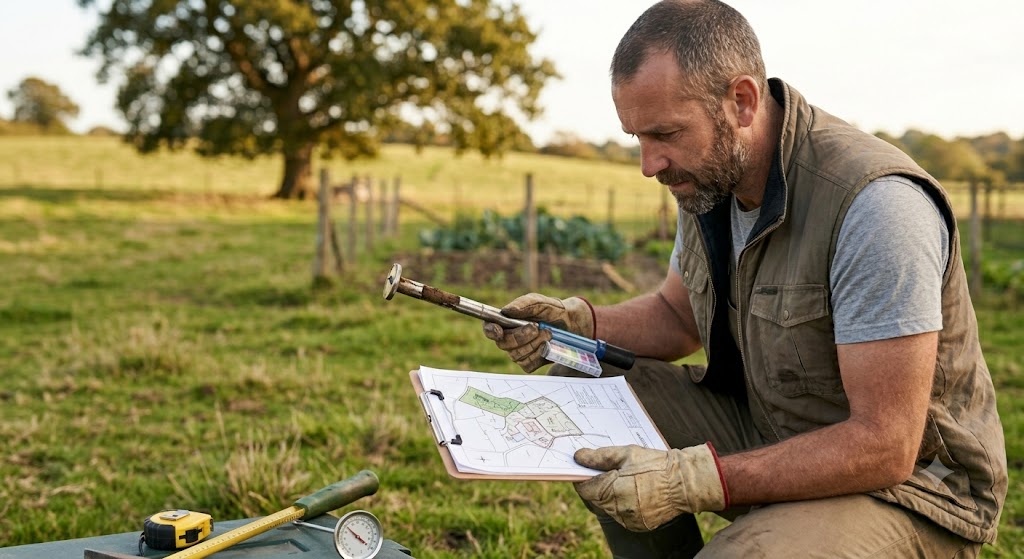
Envisioning the curb appeal is where the real rural land development work begins. A beautiful 2-acre parcel can hide the fact that there is no water available, potable or for irrigation. Does the ground perc well, how deep are the water tables in the area, have they been dropping or even going away?
Your due diligence isn’t just a responsibility for financial reasons, but also for making sure you are not taken advantage of. It is your first lesson in rural land use and/or development. Focus on the “Big Three”: water reliability (potable and irrigation), soil health, and existing structural integrity of anything that has been built.
If the ground, the flow, or the fence line is compromised, know the cost to fix it before you sign the deed—know if some things are just not fixable.
Often times, rural properties are accessible by traversing someone else’s property. If more than one property is accessed using the same “road”, this becomes a shared egress – is it legal? Can it be revoked? Are you prepared to maintain it in perpetuity? Does it cross water or have a bridge? Is there an existing ROA (Road Owner’s Association? Just because it is not declared does not mean it does not exist.
Key Takeaway:
QRC: Never trust a “turnkey” description in the rurals. If you can’t verify the infrastructure health yourself, hire a professional who understands rural code—it may prove to be the cheapest insurance policy you’ll ever buy. Make sure you do NOT rely on ‘your’ realtor or current owner suggested professional, do your research ask in here! We had no idea what shared egress easements were until AFTER the fact, what a rude awakening.
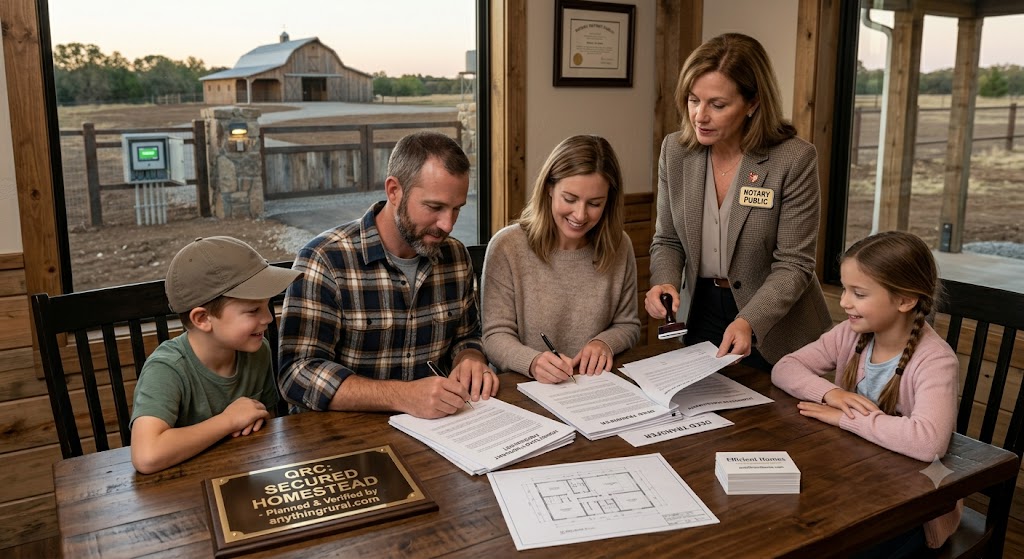
Securing Rural Land: Purchasing
Once you’ve acquired your rural land, the focus shifts from finding to fortifying. Securing your homestead isn’t just about locks on doors; it’s about establishing the physical and legal perimeter that protects your investment and your family.
This phase is about three core pillars:
Operational Continuity: Planning and then building the systems that allow you to live comfortably and manage the property efficiently. This is where you transition from “land owner” to “homestead operator,” creating the routines for maintenance, documentation, and emergency response.
Infrastructure Defense: Ensuring your power, water, and access routes are weather-proof and reliable year-round. This means planning for redundant systems—because in the rurals, the grid or the city services might be hours away during an emergency.
Perimeter Management: Defining your property lines clearly and managing the land to mitigate risks like fire or erosion. Whether it’s clearing defensible space or establishing physical markers, control starts at the fence line.
Key Takeaway:
QRC: A secure homestead is a planned homestead. Don’t wait for a crisis to realize your access road is impassable or your backup power isn’t configured. Build your defenses during the “quiet times” so they’re ready when you need them most.
Securing the Land: Fire and Fences
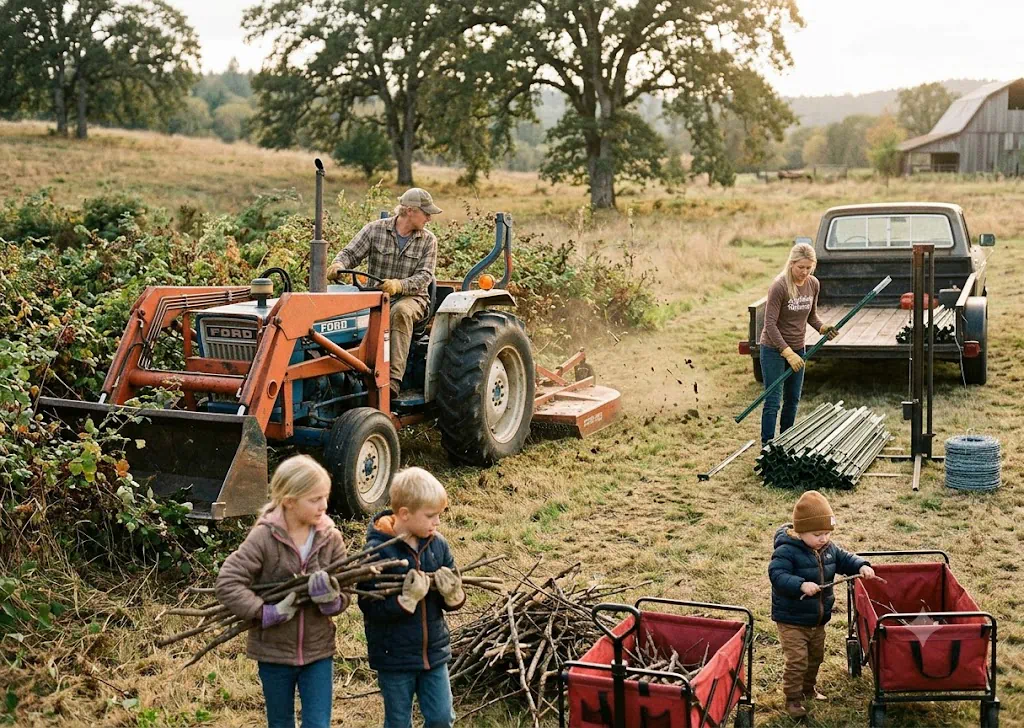
Establishing your homestead’s boundary is about more than just drawing lines on a map—it is about active layout and defense. In the rurals, your fence defines your access, contains critters or livestock, shows what you are responsible for. Your fire mitigation determines your safety and perhaps survival. Managing these two elements isn’t a project you finish once; it is a continuous commitment to protecting your family, your animals, and your hard-earned infrastructure.
This phase is about three core pillars:
Access and Escape Routes: Access and Escape Routes require careful planning to ensure that driveways and fence gates remain wide and free from obstructions, allowing for safe emergency access. Defensible Space involves clearing brush and reducing ground fuels within a 100-foot radius of structures to enhance fire safety. Perimeter Integrity is essential for effective fencing; selecting durable materials protects livestock, deters predators, and clearly defines property lines. Proper preparation in these areas can significantly enhance safety and property management.
Defensible Space: Creating a survival buffer around your home and infrastructure. This means aggressively clearing brush, limbing up trees, and removing ground fuels within at least 100 feet of any structure—giving firefighters a fighting chance to save your home.
Access and Escape Routes: Rural land access and egress requires careful planning to ensure that driveways and fence gates remain wide and free from obstructions, allowing for safe emergency access. Defensible Space involves clearing brush and reducing ground fuels within a 100-foot radius of structures to enhance fire safety. Perimeter Integrity is essential for effective fencing; selecting durable materials protects livestock, deters predators, and clearly defines property lines. Proper preparation in these areas can significantly enhance safety and property management.
Perimeter Integrity: Building fences that actually do the job you need them to do. Whether you are keeping predators out, keeping livestock in, or simply establishing a visible property line, choosing the right materials (like durable T-posts and field fencing) day one saves endless hours of chasing runaway animals or disputing boundaries later.
Key Takeaway:
QRC: Fire doesn’t care about property lines, and animals only respect fences they can see. Clear your defensible space during the wet winter months, and inspect your perimeter lines before the dry season hits—rural defense is won or lost in the off-season.

Planning the Build – Home and Infrastructure
- Planning the Build – Home and Infrastructure Planning a rural build is an iterative process of defining goals, checking feasibility, and making adjustments. To manage the complexity, we’ve broken the planning into these core pillars:
- Site Development & Foundation: Managing the rural land, excavation, and structural base.
- Utility Systems: Determining your level of self-reliance for power, water, and waste.
- Project Logistics & Budgeting: Permits, timelines, and balancing DIY vs. professional labor.
- Temporary Living Strategies: How to stage your site for comfortable living during construction.
- Rough-in to Completion: The final phases of construction and moving into operational management.
Who Does What? – You or Contractors
Some rural land development tasks/projects/plans get so big you can only manage the efforts of others, you have to hire someone. Will it be a general contractor who brings together all of the subs or will you hire all as subs, or will you hire some subs and do other portions yourself? You must have the overall rural land plans together, then break them out into a chronological order.