
Which of the Rural Property Choices do we make?
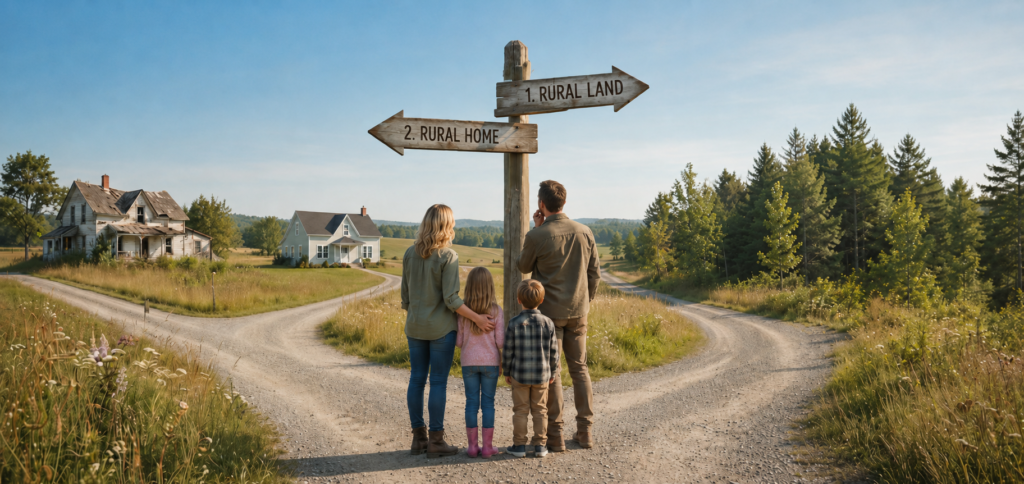
First, we are not selling anything. We are not realtors, we do not own vast tracts of land we want to unload or develop. We are owners of a small bit of acreage, eking out a living on fixed SS income. We do almost everything on our own or with the help of friends. We do not have videos, we just write stuff and maybe take some pictures. Oh yes, we are old. We try to touch on rural property choices, then rural property management. Yes, you will have to see these “keywords/phrases” woven into the page.
Table of Contents
Rural property choices
You have a myriad of rural property choices, from (1) undeveloped and inaccessible land to a (2) turnkey property. Though only two are referenced within the title, there are three shown below – dirt road access only, rundown structures, turnkey – there are many other stages in-between each of them. You could even purchase land not accessible by any normal vehicle, this is beyond the scope of this site – for now.
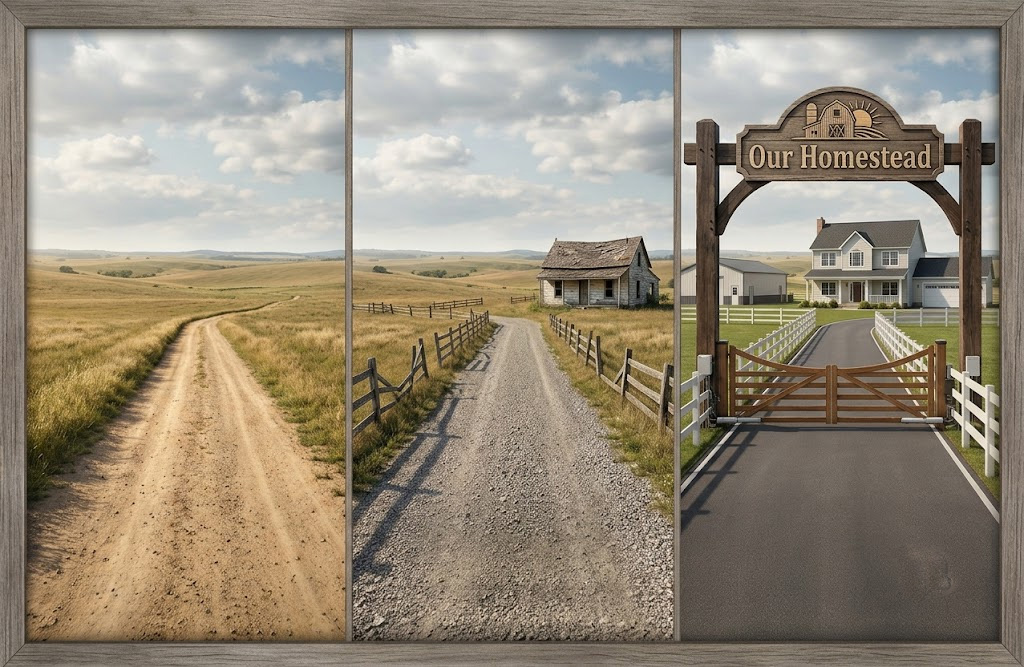
Please remember this is more of a DIY site than a site for those who pay others to secure, manage or maintain a property, whatever state it may be in. But, even then, you may be interested in what it actually takes to care for your property! Each of these three rural property choices comes with its own needs. And, once to a point where you want it, the needs may change, but that there will always be needs is a given.
Undeveloped Land

So, you’re going all-in on raw acreage. Starting from scratch gives you complete freedom to design your property exactly how you want it, but the list of initial priorities can feel overwhelming.
When you purchase undeveloped land, your first focus won’t be on building a home—it will be on securing the fundamental infrastructure that makes living and working on the land possible:
- Access & Roads: Before equipment or materials can arrive, you need reliable access. Creating an entry driveway, clearing brush, and determining whether you need dirt, gravel, or paved access for heavy construction vehicles comes first.
- Water & Wastewater: Identifying your water source—whether drilling a private well, tapping into a community system, or setting up water haul and storage—is critical. Paired with this is site testing for a septic system or alternative wastewater management.
- Power & Utilities: Deciding between bringing grid power to your site or building an off-grid solar and battery setup dictates how you plan all future structures and temporary power needs.
- Site Preparation & Safety: Clearing build sites, establishing defensible space for fire mitigation, installing perimeter fencing, and ensuring emergency services can navigate your access roads are essential early steps.
Of all the rural property choices, starting with a blank slate may require the most patience, planning, and a lot of upfront legwork, but establishing these core elements lays a solid foundation for everything you build down the road.
Not Accessible/No Existing Access

- High Initial Investment: Cutting new paths, clearing heavy timber, and grading roads requires substantial upfront capital before any construction can begin.
- Logistical Hurdles: Transporting building supplies, heavy machinery, or drilling rigs becomes a complex challenge without a stable driveway.
Purchasing land with no current access may be a good fiscal path. It may also end up being the most costly choice of all the rural property choices when it comes to time. It requires significant upfront planning, engineering, and legal work before any physical development can begin on the property:
Staging & Logistics: Without road access, getting survey crews, soil testers, and heavy equipment onto the site demands strategic staging and temporary access routes during the initial development phase.
Securing Legal Right-of-Way: Your absolute first priority is negotiating and securing a legally binding deeded easement across adjacent properties if the parcel is landlocked, ensuring permanent legal access.
Permitting & Environmental Impact: Check with local county planning departments regarding driveway permits, wetland crossings, culvert requirements, and steep-grade regulations before clearing trees or grading dirt.
Terrain Clearing & Road Construction: Factor in the heavy equipment costs required to clear brush, stump trees, cut through slope, install drainage ditches, and lay down a solid base layer of aggregate rock.
- Ease of Entry: Having a clear, paved or well-graded gravel road allows immediate transport of equipment and building materials.
- Lower Upfront Costs: Avoid the substantial expenses associated with clearing brush, cutting paths, or installing new culverts.
Accessible/With Existing Access

When making rural property choices, properties with existing access give you a major head start, but evaluating the quality and legal status of that access is vital before moving heavy equipment or building materials onto the land:
Emergency & Utility Access: Ensure the entry point meets local fire code requirements for turnarounds and width, allowing emergency services, power company trucks, and drill rigs to reach the build site safely.
Road Quality & Surface Type: Determine whether the existing driveway or access road is dirt, gravel, or paved, and evaluate if it can handle heavy construction vehicles, delivery trucks, and year-round weather without washing out.
Legal Easements & Right-of-Way: Verify that the access road is legally recorded on the property deed, especially if it crosses neighboring parcels, and confirm there are no restrictions or shared access disputes.
Maintenance Responsibilities: Identify whether the road is publicly maintained by the county or township, or if it relies on a private road maintenance agreement among neighboring property owners for grading, gravel replenishment, and snow clearing.
Suburbs to Home
Even here, it could be habitable, not habitable, involve razing, rebuilding, remodeling, and/or reconstructing, adding on. So many rural property choices every step of the way. Also, each person has there own concept of what something is. Not habitable to one may be “fine while we remodel” to another. If you are in the trades, most of us know where that latter thought leads us, never getting it done until we plan on selling.
Developed, but Run Down/Habitable

The second of the rural property choices: Buying a property that has existing structures—even if they’re in rough shape—can save you significant time on basic utility infrastructure, but it comes with a distinct set of trade-offs. You aren’t starting with a blank canvas; you’re inheriting someone else’s build choices, deferred maintenance, and potential safety hazards.
When taking on a fixer-upper rural property, your immediate priorities shift from raw land access to assessment, cleanup, and structural stabilization:
- Utility Inspection & Safety: First, evaluate existing systems. Is the septic tank functional or structurally failing? Is the well pump operating, and is the water safe? Inspect electrical service panels for outdated wiring, undersized breakers, or DIY fire hazards before powering up high-draw tools or equipment.
- Structure & Envelope Repair: Stopping further deterioration is key. Focus immediately on fixing roof leaks, replacing damaged siding or foundation supports, and sealing out weather, mold, and pests to preserve the core structure.
- Site Cleanup & Brush Control: Older properties often come with years of accumulated junk, overgrown vegetation, and failing fence lines. Clearing brush around buildings creates vital defensible space for fire safety and opens up workspace.
- Remodel vs. Rebuild Decisions: Evaluate whether existing outbuildings, barns, or living quarters are worth salvaging through targeted DIY repairs or if demoing and starting fresh makes more economic sense.
A run-down property gives you a head start on basic access and utility hookups, but turning it into a comfortable, reliable home requires a realistic eye, safety-first prioritizing, and a lot of sweat equity. The more work, the ore rural property choices you have to make.
Turnkey, Move Right In

Choosing a fully developed, turnkey homestead is the third of the rural property choices. It means skipping years of heavy groundwork, site permitting, and/or structural rehabilitation. You step straight into a functional setup with a move-in-ready home, established outbuildings, and existing perimeter infrastructure. However, “turnkey” doesn’t mean effort-free—it simply shifts your role from builder to system operator and ongoing manager. Your rural property choices do shift, but to maintaining, sometimes adding to, what is there.
When taking over a complete, operational property, your main priorities revolve around understanding all that is in place, preventative maintenance, and considering long-term optimization. The new rural property choices become:
- System Mapping & Operations: Learn how every active component on the property works together. Walk the lines to identify main power shutoffs, well head shut-off valves, sub-panel locations, generator transfer switches, and septic tank access covers so you aren’t searching for them during a utility outage or emergency.
- Maintenance Schedule Baseline: Establish a proactive routine for every structure and machine. This includes servicing well pumps and filtration media, inspecting backup power systems and battery banks, clearing gutter runs, checking roof flashing, and maintaining tractor or implement fluids.
- Fencing & Property Security: A complete property comes with extensive boundary lines, automatic entry gates, and paddock fencing. Regularly check fence lines for fallen branches, rot, or washouts, and keep mechanical gates well-lubricated and properly aligned.
- Personalized Upgrades & Efficiency: Once you understand how the current layout functions through a full season, you can start tailoring it to your specific needs—whether that’s adding automated solar controls, upgrading shop lighting, or expanding existing garden beds and animal enclosures.
A turnkey property allows you to hit the ground running on day one, giving you an established foundation and infrastructure, so you can spend less time tackling emergency repairs and more time enjoying or refining your homestead.
Because property regulations, zoning laws, building codes, and land-use ordinances are strictly governed at the county, township, or municipal level (rather than by uniform state rules), there is no single document for each state. However, as you consider your rural property choices, know that at the local level, state and/or federl guidelines are often referenced or incorporated/
However, each state maintains a primary government portal or university extension program that publishes state-specific land-use planning guidelines, agricultural district rules, and county planning directory tools.
As you ponder your rural property choices, consider the laws that may come into play. Below is a guide to some of the primary land-use, zoning, and rural development resources for all 50 states:
Some State and Federal Guidelines
These may impact your rural property choices. Rural property choices may well be compounded by the various AHJ’s (authorities having jurisdiction). If you just want to chat about, try the watering hole. Every state, county, municipality or other entity (typically governmental) will impact your rural property choices. IS there a waterway, a habitat, a historical flood plain you property encompasses or touches on? Do you have egress through properties owned by others? Is it legal access?
Alabama to Hawaii
- Alabama: Alabama Cooperative Extension System – Land & Resource Management
- Alaska: Alaska Department of Commerce, Community, and Economic Development – Division of Community and Regional Affairs
- Arizona: Arizona Department of Real Estate – Development & Subdivisions
- Arkansas: University of Arkansas System Division of Agriculture – Community & Economic Development
- California: Governor’s Office of Planning and Research (OPR) – General Plan Guidelines
- Colorado: Colorado Department of Local Affairs (DOLA) – Community Development & Planning
- Connecticut: Connecticut Office of Policy and Management – Conservation & Development Policies Plan
- Delaware: Delaware Office of State Planning Coordination
- Florida: Florida Department of Commerce – Community Planning, Development, and Services
- Georgia: Georgia Department of Community Affairs (DCA) – Local Planning Resources
- Hawaii: Hawaii State Land Use Commission
Idaho to Missouri
- Idaho: Idaho Department of Commerce – Rural & Community Development
- Illinois: University of Illinois Extension – Local Government & Community Education
- Indiana: Purdue Extension – Community and Regional Development
- Iowa: Iowa State University Extension and Outreach – Community and Economic Development
- Kansas: Kansas Department of Agriculture – Land Use & Rural Resources
- Kentucky: Kentucky Department for Local Government – Comprehensive Planning Resources
- Louisiana: LSU AgCenter – Community & Rural Development
- Maine: Maine Department of Agriculture, Conservation and Forestry – Land Use Planning Commission (LUPC)
- Maryland: Maryland Department of Planning – Local Planning Assistance
- Massachusetts: Massachusetts Executive Office of Housing and Livable Communities – Rural Policy Advisory Commission
- Michigan: Michigan State University Extension – Land Use & Zoning Education
- Minnesota: Minnesota Environmental Quality Board (EQB) – Local Land Use Resources
- Mississippi: Mississippi State University Extension – Community Development
- Missouri: University of Missouri Extension – Community Development Program
Montana to North Carolina
- Montana: Montana Department of Commerce – Community Planning Inc. Assistance
- Nebraska: Nebraska Association of County Officials – Zoning & Planning Directories
- Nevada: Nevada Department of Conservation and Natural Resources – State Land Office
- New Hampshire: New Hampshire Office of Planning and Development – Community Planning Resources
- New Jersey: New Jersey Department of State – Office of Planning Advocacy
- New Mexico: New Mexico Association of Counties – Land Use & Planning
- New York: New York Department of State – Division of Local Government Services (Zoning & Land Use)
- North Carolina: NC State Extension – Local Land Use & Agriculture Development
North Dakota to Wyoming
- North Dakota: NDSU Extension – Center for Community Vitality
- Ohio: Ohio State University Extension – Community Development & Land Use
- Oklahoma: Oklahoma State University Extension – Rural & Community Development
- Oregon: Oregon Department of Land Conservation and Development (DLCD)
- Pennsylvania: Pennsylvania Department of Community and Economic Development (DCED) – Land Use & Municipal Planning
- Rhode Island: Rhode Island Division of Statewide Planning
- South Carolina: SC Revenue and Fiscal Affairs Office – Local Planning Commissions Directory
- South Dakota: SDSU Extension – Community Development
- Tennessee: University of Tennessee Extension – Community Economic Development
- Texas: Texas A&M AgriLife Extension – Community Economic Development
- Utah: Utah Governor’s Office of Planning and Budget (GOPB) – Land Use
- Vermont: Vermont Agency of Commerce and Community Development – Planning & Community Development
- Virginia: Virginia Department of Housing and Community Development (DHCD) – Community Revitalization
- Washington: Washington State Department of Commerce – Growth Management Act (GMA) & Land Use Planning
- West Virginia: West Virginia University Extension – Community Educational Development
- Wisconsin: UW-Madison Division of Extension – Center for Land Use Education
- Wyoming: Wyoming Association of Municipalities / County Commissioners Association – Land Use Planning
Federal & National Resources – USA
Local Planning Departments: To get specific setback rules, easement requirements, maximum building footprints, or agricultural exemption classifications, always contact the County Planning & Zoning Department or Building Department in the exact county where the property is located.
USDA Rural Development Program: Check federal eligibility maps, home loan guidelines, and property standards across all states via the USDA Property Eligibility Tool. Make sure your rural property choices are made with as much accurate knowledge as is possible.
If you are pondering any aspect of these rural property choices, ask about anything in the forum. If someone else is pondering their rural property choices and you have input, please provide it! Rural property choices are a daily given, making the best choice is the one we are shooting for. With good questions, answers, and insights, we can help one another make them.
Other Country Resources
Venturing into rural property ownership or relocation across international borders introduces a massive shift in scale, expense, and legal complexity compared to buying domestically in the U.S.
For anyone moving or investing abroad, the upfront financial hurdles can be staggering. Beyond the base purchase price of raw acreage, buyers face steep international wire fees, volatile foreign exchange rates, local transactional taxes, and substantial legal or notary fees. Furthermore, many countries impose strict caps or outright prohibitions on foreign ownership of agricultural, border, or coastal land to protect national sovereignty, meaning you may have to navigate complex corporate structures, long-term leaseholds, or government-approved trusts just to secure rights to the dirt.
Canada
- Provincial Regulations: Land laws are governed tightly at the provincial level rather than federally, with distinct foreign buyer bans or extra property transfer taxes (such as in British Columbia or Ontario) that can add heavy surcharges to rural and agricultural acquisitions.
- Environmental & Resource Restrictions: Rural property choices often come with strict provincial Crown land interfaces, timber rights reservations, and water access regulations that limit what you can clear or build.
- Non-Resident Tariffs: Non-residents frequently face higher financing hurdles, stringent reporting requirements, and specialized tax withholdings upon eventual resale.
Costa Rica
- Maritime Zone Laws: Strict restrictions apply to land within 200 meters of the coastline (the Zona Marítimo-Terrestre), where absolute ownership is heavily limited and concession rights must be acquired through local municipalities.
- Corporate Holding Structures: Many foreign buyers make rural property choices through a local corporation (Sociedad Anónima or S.R.L.) to manage titles and simplify liability, requiring local legal representation.
- Title Verification: Rural land or properties historically relied on a registry system that occasionally features overlapping boundary claims, making a rigorous title history and professional survey mandatory before purchase.
France
- Agricultural Oversight (SAFER): The French government uses regional settlement agencies called SAFER (Sociétés d’Aménagement Foncier et d’Etablissement Rural) which possess a legal right of pre-emption to intervene in and block rural land sales if they conflict with local agricultural development.
- Inheritance Laws (“Forced Heirship”): French civil law dictates that a fixed portion of your real estate estate must automatically pass to your children, overriding standard wills or independent estate plans.
- Hidden Closing Costs: Standard acquisition costs (notary fees, registration taxes, and administrative stamps) routinely add an extra 7% to 10% on top of the listed property purchase price.
Mexico
- The Restricted Zone: Under Article 27 of the Mexican Constitution, direct foreign ownership of land is prohibited within 100 kilometers of international borders and 50 kilometers of coastlines.
- Bank Trusts (Fideicomiso): To legally acquire residential or rural land within the restricted zone, foreign buyers must establish a bank-administered trust, which carries setup costs and recurring annual maintenance fees.
- Ejido Land Complexities: Communally held agricultural land (ejido parcels) involves intricate agrarian laws and community voting procedures that make buying safe title significantly more complicated than purchasing private fee-simple property.
Whether you should make rural property choices outside wherever you live now is another story. Perhaps asking in the forum and soliciting from someone who has done so. They may have further insight on rural property management after a purchase as well.